Choose timezone
Your profile timezone:
We welcome you to the sixth international Public Awareness and Engagement with Research Infrastructures conference, PAERI'26. The event will be hosted by European XFEL in the Hamburg region, Germany. The theme of the conference is Navigating Science Communication in a Shifting Landscape.
The preliminary programme is online. Registration is open until end of January 2026. Abstract submission has closed. The conference will take place 18-20 March 2026.
The PAERI'26 venue is on the campus of European XFEL, which is the world's largest X-ray laser. The 3.4 km long facility generates extremely intense X-ray flashes used by researchers from all over the world to map atomic details of viruses, film chemical reactions, and study processes like those in the interior of planets.
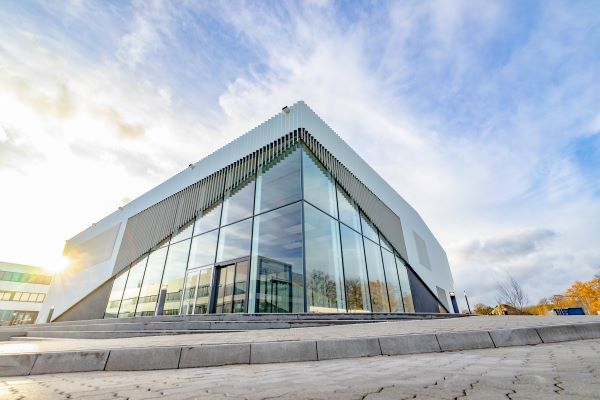
The Lighthouse Visitor centre facade represents raising the curtain for science and research.
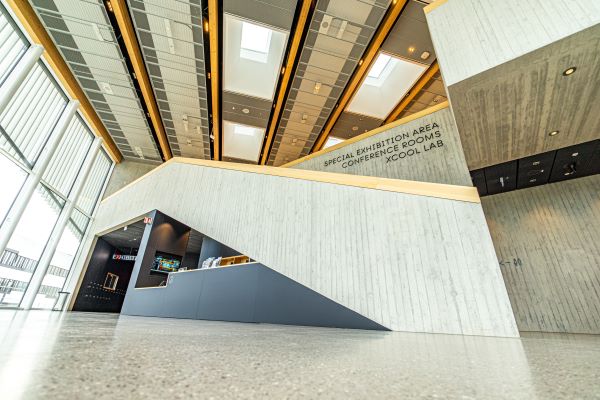
The Lighthouse is home to a modern conference facility, the Xcool Lab for school visits and a public exhibition.
Research infrastructures need to stay current with new and emerging technologies to address increasingly complex societal challenges. However these upgrades often mean acquiring substantial funding; convincing policymakers on local, national, and even international levels of their necessity and impact; dealing with the concerns of the local community; and ensuring buy-in from staff within the institutes themselves. In an age of ever tightening budgets, geopolitical upheavals, and changes in national and international research priorities, communication strategies supporting these upgrades are key.
In this plenary session, several research institutes across Europe — each at different stages of the upgrade process, from planning and securing funds to construction and post-upgrade operations — will share their experiences: what worked well, what didn’t, and the lessons learned along the way. In a follow-up panel, they will discuss the current landscape for research facility upgrades and how to effectively communicate with diverse stakeholders, including policymakers, the scientific community, and industry in a moderated Q&A session.
Confirmed institutes: DESY, ESRF, Helmholtz-Zentrum Berlin
Possible additions: MAX IV, CERN, ALBA, Diamond
Imaging technologies are at the core of modern science, revealing the invisible—from cellular dynamics to the structure of materials. Yet those who make this possible—imaging scientists and core facility staff—often remain unseen within academic hierarchies. These professionals enable discovery across disciplines, but global inequalities still determine who has access to advanced imaging, who is recognised, and who truly belongs in scientific conversations.
Global BioImaging (GBI), an international network spanning more than sixty-five countries, addresses these disparities by building an inclusive platform where imaging scientists, facility operators, and managers learn from and support one another. Coordinated under EMBL’s hosting umbrella, GBI promotes equitable access, mutual learning, and recognition through initiatives that redefine inclusion in global science.
At the heart of this effort is imaging4All, an initiative to democratize imaging by strengthening local expertise and fostering equitable regional engagement—particularly across Africa, Latin America, and Southeast Asia. GBI defines inclusion as an active practice of co-creation rather than outreach, recognising that every imaging community, regardless of resources, contributes essential expertise and context. This principle is exemplified by translating the Royal Microscopical Society (RMS) Facility Recognition Guidelines into multiple languages by local experts who adapted the text to their regional realities.
Complementing this work, the Career Paths for Imaging Scientists Working Group unites ca.100 experts from 28 countries and 14 time zones to address inequities in how imaging professionals are recognised and supported. By pooling global experience, the group is shaping shared guidelines for fair and sustainable career frameworks—advocating institutional change that values imaging scientists’ essential role in research.
To foster continuous exchange, GBI launched the Spotlight Series in 2024: monthly online seminars connecting imaging communities across continents. With dual sessions timed for both the Americas and Asia-Pacific, the series highlights global voices, local innovations, and shared purpose—ensuring engagement remains accessible, inclusive, and globally relevant.
This presentation explores how GBI’s approach—grounded in equity, reciprocity, and distributed leadership—reimagines belonging in scientific infrastructures. Through examples from imaging4All, the Career Paths initiative, and the Spotlight Series, it shows that equity in science communication must go beyond participation toward shared authorship, co-created knowledge, and a truly global research community where everyone can contribute and lead.
Acknowledgements
Global BioImaging is supported by the Chan Zuckerberg Initiative (CZI) and the Wellcome Trust. This work is made possible by the voluntary contributions of our national and regional partner networks and Working Group members.
An ERC-funded program, FRONTIERS places science journalists in research groups. For 3-5 months, the journalists are invited to closely follow the groups work, follow their own interests by independently completing a journalistic project, and take a deep dive into one particular topic. While only early-, mid- and late-career journalists can apply, research institutions or groups can signal their interest by joining a host database or by encouraging pre-existing journalist contacts to apply. I will report and share experiences from my own Frontiers fellowship, for which I spent four months at the University of Copenhagen, and offer some food for thought about broad reach versus close relationships with media.
Science communication thrives when abstract concepts become lived experience. Building on two successful pilot performances in 2025 of “Quantum meets Improv” this talk presents a mobile, participatory improvisation theater format that will bring the fundamentals of quantum physics into small‑town, low science capital venues across southern Germany in 2026. By pairing brief, researcher‑led introductions with audience‑prompted improv games the project transforms notoriously counter‑intuitive ideas (superposition, entanglement, tunnelling) into embodied, humanized and humorous narratives. The format also includes and embeds a “Meet‑a‑Scientist” dialogue with 5-7 scientists in the break and after the show that personalizes researchers and demystifies the scientific process.
During the lightning talk I will (1) outline the pedagogical rationale behind experiential quantum storytelling, (2) share short examples of how improv mechanics map onto quantum principles, and (3) discuss potential scalability and its shortcomings.
By demonstrating that humor, spontaneity, and direct interaction can make quantum physics accessible beyond elite academic circles, this project offers a replicable blueprint for immersive science outreach that bridges the gap between cutting‑edge research, creates dialogue between researches and lay audiences and increases everyday curiosity.
Inspired by FameLab by Cheltenham Festivals, at STFC I created “FameRAL”, our own version of the event. It is a science communication competition for each cohort of 60-70 Industrial Placement students. Each of them is encouraged to present for three minutes on a scientific, engineering, mathematical or medical topic of their choice, ideally related to the work they have been doing as part of your placement.
I offer training and follow up practice sessions to help them create their talk, and then they submit a pre-recorded video, which is then judged by communications staff across the organisation. My aim is not only for them to develop their communication skills, but to finish their placement and be able to promote the work they did, and the overall work of the facility, clearly and passionately. Student talks have varied from supersymmetry to Roman coins, and submissions come from across the STFC departments, inspiring the students in their cohorts and subsequent years, and even teaching the judges something new.
This lightning talk presents how ELIXIR’s social media strategy has evolved in the post-X landscape. It will outline concerns about maintaining visibility on X, lessons learned from a Mastodon trial, the potential for growth on Bluesky and the reasons we are prioritising LinkedIn. The talk aims to stimulate discussion on how research infrastructures can adapt their communication strategies in a volatile social media environment.
Since the change of ownership of X (formerly Twitter) in October 2022, many research organisations reassessed their use of the platform due to concerns over misinformation, reduced reach, misaligned values and shifting user base. Bluesky and Mastodon emerged as two of the main online platforms aiming to ‘replace’ X in science and technology domains. At ELIXIR, we trialled content on both Bluesky and Mastodon to see whether these platforms had the potential to fill the void.
This talk will share the results of these trials, the insights we gained into platform usage, and how we adapted the ELIXIR social media strategy to optimise engagement. It will consider the evidence that many former X users remain without a clear alternative, and what this means for developing communication approaches that remain effective when audiences shift and fragment.
In large EU-funded consortia like ReMade@ARI, one recurring challenge is motivating a diverse group of members - with different backgrounds, technical expertise, and locations across Europe - to actively promote the project’s impact on LinkedIn. Indeed, ReMade@ARI brings together hundreds of scientists and provides coordinated access to over 50 European analytical research infrastructures, advancing the development of innovative, recyclable materials and supporting the transition to a circular economy.
During ReMade’s 3rd Annual Meeting, a talk on “The Role of Social Media in Science Outreach” sparked noticeable interest among participants. But what next? How can we find a universal “hook” to encourage people to revive their LinkedIn profiles and reconnect with their ReMade network - and beyond? Could short, logic-based online games be the key?
In this short talk, I will share insights from an experimental “LinkedIn Games Tournament” campaign: what worked, what didn’t, and what motivated people to join (or not). With the growing popularity of “serious games” in science communication, can this playful approach be adapted to a professional social network like LinkedIn? Can a five-day online tournament be seen as work and can playfulness strengthen a community while boosting a project’s visibility?
In a time when metrics are often the key driver, the STFC Early Careers Engagement Programme offers a compelling counter-narrative. This talk explores how staff involvement in public engagement can be evaluated not just through surveys and participation rates, but through the stories and subtle transformations that numbers alone cannot capture.
The Early Careers Engagement programme encourages apprentices and graduates to complete three days of public engagement per year of their early careers scheme. Through training, mentoring, and volunteering in a wide range of contexts, participants gain confidence to engage the public with STFC science and technology and build sense of belonging within STFC. The evaluation has shown this supportive programme has enhanced staff skills and provided evidence useful for their early careers' schemes and further professional development.
We will explore how this two-year, mixed method evaluation has captured value through qualitative insights—interviews, reflections, and observed shifts in mindset. But these insights didn’t just capture impact—they shaped it. Feedback from participants directly informed programme adaptations, from refining training to rethinking how engagement opportunities are communicated and supported. This feedback loop of evaluation, creating change and evaluating again has been significant, not only in improving programming but demonstrating impact and value.
ACTRIS ERIC (Aerosol, Clouds and Trace Gases Research Infrastructure) is a pan-European distributed research infrastructure supporting atmospheric science through open data, services, and collaboration to address climate and air quality challenges. As a newly established ERIC, ACTRIS faces the dual challenge of building its operational maturity while demonstrating impact across a geographically and thematically diverse community. Traditional quantitative metrics capture only part of the story. This contribution explores how ACTRIS seeks to define and communicate its impact beyond numbers, focusing on stories of collaboration, capacity building, and shifts in understanding. By embracing qualitative indicators and community narratives, ACTRIS aims to broaden how success is defined and measured, showing how collective effort and shared purpose can drive meaningful impact in times of global environmental urgency.
The Netherlands Institute for Radio Astronomy (ASTRON) leads the "Maak & Ontdek" (Make & Discover) project, demonstrating how research institutions can address educational inequality through innovative mobile outreach. This three-year regional collaboration of six partners in science, technology and circularity will serve 11,500+ young people across the socioeconomically challenging South and East Drenthe province in the Netherlands, specifically targeting schools and families with limited resources for educational excursions.
Traditional science communication requires students to visit research facilities, creating access barriers for underfunded schools in remote areas. Make & Discover reverses this: we bring science directly to students through a mobile escape room, modular lesson kits, and a traveling "Make & Discover Bus". This ensures socioeconomic status and geographic location don't determine children's exposure to cutting-edge science and technology in both formal and informal education.
The communication strategy centres on immediate, measurable impact. We document real-time engagement during mobile visits, measuring excitement, comprehension, and stated interest in technical careers. Short-term indicators include increased participation in follow-up activities and teachers requesting return visits.
Crucially, this model will demonstrate economic sustainability for science communication programs. By engaging regional businesses as sponsors and co-creators of educational content, we're developing a framework reducing dependence on traditional outreach funding. Companies provide both financial support and real-world context, showing students direct pathways from classroom learning to local career opportunities.
For communication professionals, this presentation offers inspiration for mobile program development, methods for measuring impact, and frameworks for building business partnerships supporting science outreach. We'll share insights on logistics, content adaptation, and techniques for creating memorable experiences that spark genuine scientific curiosity.
This model shows research institutions can drive regional equity while building sustainable community partnerships.
Content creation is much too complex? Forget about that. In this Lightning Talk European XFEL social media manager Sven Kamin will show live on stage how easy content for social media can be created in less then five minutes without professional gear.
The talk should help to encourage the people in the audience to become a digital ambassador for their facility, institution or project without being afraid of technical hurdles.
Lunch, group photo, campus walk
In times of misinformation and increasing polarization, framing plays a crucial role in how the public perceives science and policy issues. This talk introduces the concept of framing in communication science as defined by Robert Entman et al. and discusses how NGOs strategically use emotional framing to shape public discourse and mobilize support. Drawing on examples from advocacy communication, it illustrates the impact of framing choices on audience engagement, trust, and policy debates - and highlights what research communication can learn from these practices.
For many of us trained in science, communication seems like a straightforward process: identify misinformation, present the correct facts, and trust that evidence will do the rest. But in today’s polarized landscape, it’s increasingly clear that differences in opinion rarely stem from differences in information. Instead, they often arise from differences in values: the deeply held worldviews, priorities, and moral frames through which people interpret information in the first place.
This talk explores what happens when we shift our focus from informing people to understanding them. Drawing on insights from recent research and real-world examples from science communication campaigns, I will argue that the traditional “deficit model” (assuming people just need more information) fails not because people don’t understand the facts, but because the facts are filtered through different value systems.
As Bloomfield writes in Science vs. Story, scientific communication often falters because science tells people what is true, while stories tell them what is meaningful. Similarly, McIntyre’s How to Talk to a Science Denier reminds us that persuasion in the face of misinformation is less about refuting claims than about building trust and shared identity. And as Storr argues in The Science of Storytelling, humans think in narratives first and reason second: our values shape which stories feel true long before the data arrive.
For instance, climate change can be seen as a threat to the planet (a care value), a call for stewardship (a loyalty value), or an assault on personal freedom (a liberty value). The underlying data don’t change, but how people feel about the data does, depending on what they value most. When communicators ignore this, we risk speaking fluently to those who already agree with us, and alienating those who don’t.
This session invites science communication officers to reflect on who they are really talking to, and who they are not. The goal is not to “market” science differently, but to make it relatable and relevant by understanding the human stories behind disagreement, and how to leverage them to communicate science in ways that build connection rather than conflict.
Facts matter. But as we face growing mistrust and misinformation, we must remember: facts travel further when carried by values and stories people recognize as their own.
Through family, friends and neighbours, CERN’s internal audience is intertwined with our local audience. Building support for a possible future collider at CERN not only means dialogue with local citizens, associations and authorities but also addressing internal questions and concerns and enabling the CERN community to get involved in targeting misinformation. We showcase how internal and local initiatives have begun to build dialogue across divides and the work still to come.
CERN’s internal community stretches far beyond the 3000 staff and 2000 students and graduates, it reaches a worldwide community of 12 000 particle physicists, some present on site, some remote. Different tools and technologies help to unite the community and keep them informed. But as more tools emerge and more entities across the organisation want to showcase their achievements, internal comms needs to evolve. This talk showcases how we have tested different tools and technologies as well as creative initiatives to engage the community. It includes examples of when AI-generated content has helped, as well as when it hasn’t, and how central comms is working together with the comms ‘islands’ across CERN to improve.
How we access information is changing. People now have large language models at their fingertips - whether it’s ChatGPT, Google’s Gemini, Claude or Copilot. This is creating a huge shift in digital visibility, including how audiences find out about research infrastructure.
Generative AI not only presents information in new ways, but prioritises content differently compared to traditional search engines. Its increased use is making it more important for communicators to consider a mixture of approaches in content and comms strategies to show up in the best way for different audiences - whether funders, researchers, industry collaborators or local communities.
For instance, 84% of outputs from generative AI rely on third party content versus owned content (Sequencr.ai, 2025) giving greater prominence to earned and shared media approaches. That’s while organisations with structured, cited content are three times more likely to get referenced by generative AI (Search Engine Journal, 2024).
It is redefining what content formats to prioritise and which channels to use. Having content across multiple channels (such as on an organisational website, referenced through user generated content, and incorporated into an earned media approach) means it will be twice more likely to appear in large language model answers (HubSpot, 2024).
Our team at Marketbridge (previously April Six) are specialists in supporting science and innovation organisations with communications. We have supported a range of research facilities from CERN to Diamond Light Source, ESS and ILL, with communications approaches. Now as a Marketbridge company, we have trialled and tested our own practical approaches to GEO (Generative Engine Optimisation) and gained access to experts building analytics platforms, as well as spoken to those developing large language models and other agencies to get a good understanding of how generative AI is shaping how organisations show up across a range of sectors.
This talk will cover:
The German Centre for Astrophysics (DZA) is a large-scale research centre located in the heart of Europe, in the border area of Germany, Poland and the Czech Republic. With its unique combination of astrophysics, digitalisation and technology development, the centre aims to be a driver of innovation in Lusatia through cutting-edge research, thereby supporting the region in its transformation into a science region. Regional networking, education and science communication play an essential role in the DZA. Together with a strong network of regional partners from education, research, society and culture, we want to build on Saxony's history of astronomy and space science and write a new chapter with the local people. Our approach is decentralised, low-threshold, transparent and cooperative. In this presentation, we briefly introduce the concept of science communication and regional networking at the DZA, present our initial experiences with participatory formats in rural areas and provide an outlook on further planned developments and activities.
This interactive workshop invites science communicators to critically evaluate how systemic inequalities in science shape who is seen, heard, and included in public engagement, and how these inequities affect communication practices. Participants will engage in a facilitated “inclusion hackathon,” working in small groups to identify barriers, co-create actionable principles, and translate them into strategies for their professional roles. Expected outcomes include a collective list of principles, a qualitative dataset, and an invitation to contribute to a potential post-session article or communication.
Relevance of the Workshop
Traditional diversity discussions often focus on presence rather than how systemic inequities influence participation and visibility. This workshop aims to address structural questions: How do gender, disability, class, geography, and intersecting factors shape who is heard? How do these inequities manifest in communication and outreach?
Goals
- Evaluate how structural inequalities in science affect communication practices.
- Explore multiple intersecting dimensions of diversity (gender, language, geography, accessibility, intersectionality).
- Co-create actionable principles applicable in participants’ professional contexts.
Expected Outcomes
- A set of inclusion principles tied to communication practice.
- A qualitative dataset (recordings —upon consent by participants—, written material, votes) for analysis and potential collaborative publication.
Preliminary Format
STEP 1: WELCOME & ICE BREAKER
Chairs welcome participants in a room with five tables, and five posters hanging with provocative messages regarding each diversity dimension. Participants read the posters, stand by one that resonates, introduce themselves, and explain their choice. Chairs present the session's goals and invite participants to join a table (one dedicated to each dimension).
STEP 2: HACKATHON — EXPLORATION & DESIGN
Tables have a large paper and markers. Exploration phase start with guided questions: Who is excluded? What barriers exist? Who benefits? How do these inequities affect communication? Once evaluated and written, participants convert insights into 5–8 clear, positive, action-oriented principles defining what (action), where/for whom (context/target), and how it improves inclusion.
STEP 3: GALLERY WALK & VOTING
The posters with the principles are hung on the walls. Participants receive 3 voting stickers (gold, silver, bronze), and are invited to read and vote those that consider a priority. Chairs summarise top-voted principles (max. 10) and facilitate discussion, e.g. which actions can participants implement, which dimensions were underexplored.
STEP 4: CLOSING & COMMITMENTS
Participants write 1-2 commitments on a post-it for a “Commitment Wall.” Chairs invite participants to leave contact info for follow-up and potential contribution to post-session analysis or publication.
What this session is about
Step into the studio lights for a fast-paced participatory game-show where science communication meets satire! Two teams of communicators compete for the SBASCA – Super Best Amazing Science Communicators Award, testing their wit, skepticism, and science savvy. Each round throws them bizarre headlines, viral “discoveries,” and outrageous claims: real or fake?
The audience isn’t just watching, they shape the game. Participants vote live on every claim, sometimes competing directly with the teams, sometimes joining briefly as “guest experts.” Through these playful twists, everyone in the room becomes part of the contest.
This is a workshop in critical science communication. Humor and competition create a safe space to explore how easily misinformation can trick us, how laughter lowers barriers, and how play sharpens attention and memory. After the final round, a short facilitated reflection connects the experience to real-world challenges of communication in an age of disinformation and polarization. Participants leave with fresh ideas for interactive formats, insights into fact-checking strategies, and inspiration for using humor responsibly in their own work.
Why this session is important
In a world where misinformation travels faster than facts, science communicators must make reliability both visible and memorable. Fake news erodes trust but also reminds us that communication must be sharp, creative, and emotionally engaging to compete with noise. The deeper challenge is polarization: even when facts are clear, debates fracture along cultural or political lines.
This workshop immerses participants in both dynamics. By spotting fakes, competing with peers, and unpacking why some claims divide audiences, they experience these challenges firsthand, transforming abstract issues into shared, practical learning.
How it works
- Two teams of science communicators face off in a parody TV game-show format.
- Each round presents strange headlines, viral memes, and quirky “scientific” claims.
- Teams must decide whether they’re real discoveries or fake news dressed up as science.
- The audience participates throughout: Voting live on every round; competing against the teams in surprise “audience-only” rounds; & volunteering as short-term “guest experts”
- The winning team takes home the gloriously over-the-top SBASCA: Super Best Amazing Science Communicators Award trophy.
- The game ends with a facilitated reflection linking the fun back to strategies, trust, misinformation, and polarisation in science communication.
By mixing competition, comedy, critical thinking, hands-on audience involvement, and reflection, the session creates an unforgettable experience that entertains while equipping participants with practical insights to strengthen their communication practice in times of misinformation and polarisation.
Measuring and communicating impact to funders and users is key to the continuity of research enablers. Yet measuring the less visible contributions of research infrastructures to research outcomes remains a formidable challenge.
Australia’s national research infrastructures (NRIs), funded by the National Collaborative Research Infrastructure Strategy (NCRIS) program, play a pivotal role in research and innovation in every discipline including climate science, astronomy, health, data and more. Without them, researchers do not have access to the tools, data, facilities, technical expertise and research translation to support their endeavours.
In Australia, we are investing in the supporting infrastructure needed to bridge the gaps between researchers, infrastructure and communicating impact.
Research Infrastructure Connected (RIC) helps researchers find the tools they need and the experts who can shorten the time it takes to get to a working solution. RIC achieves this through fostering collaboration, storytelling, and public engagement.
This session, led by Anita Gibson from RIC, explores how Australian research infrastructures are working together to explore new tactics to meaningfully connect with diverse audiences and communicate impact.
Anita will provide an overview of NCRIS and RIC’s mission, highlighting outreach strategies to government, industry, researchers and research infrastructure professionals.
The session will then spotlight two NCRIS capabilities using creative approaches to engagement:
• AURIN will showcase its use of ArcGIS StoryMaps to make complex urban data accessible and relatable.
• Microscopy Australia will share its ‘Stories and Structures – New Connections’ exhibition, which aims to engage indigenous Australian communities in STEM by exploring the rich visual parallels between the representations seen in many Indigenous artworks and the microscopic structures hidden in the natural world.
Together, these examples demonstrate how research infrastructure communicators are shifting the narrative to make the impact of research infrastructure visible, valued, and understood.
In the past 15 years, both, scientists of science communication and practitioners have professionalized their respective trades enormously. The current shifting landscape does not only provide threat and danger.
We believe, the current challenges provide a golden opportunity for science communicators. For developing their role into one of strategic advisory. Unfortunately, it is unlikely a new job description for a Chief Communication Officer (CCO) develops from thin air.
Let’s roll up our sleeves: In the workshop, we co-create together a 360° visual on the question: “How do science communicators actively shape their role as part of the C-suite”.
The mutual collection of experiences and opinions follows a proven process that is designed to explore roles, vision, resources and more relevant aspects.
The facilitators invite seasoned communicators and leading researchers who bring openness and curiosity to the session. This is a workshop with no strings to ideation and no pre-fabricated outcomes.
During the process, participants recognize where leading researchers and communicators share views and where they differ. New findings and aha-moments are inevitable and add an enjoyable dynamic to the discussion.
Petra and Jörg Nieckchen, both coaches, founded their Consultancy to support ambitious science leaders who want to strategize their funding and attract top talent. Above all, they recognize that science needs changing in a changing world.
The participants will leave the workshop enriched by new arguments and ideas for immediate actions. The workshop might serve as a first of future exchanges outside PAERI.
In a time of information overload, polarization, and general “science fatigue,” communicators often find themselves talking to the already convinced. The real challenge lies elsewhere, in reaching those who are indifferent, unaware, or quietly skeptical. The people who scroll past our posts, walk by our exhibitions, or don’t even know that what we do could matter to them. Research infrastructures, with their scale, complexity, and distance from daily life, face this challenge even more acutely.
This session explores practical strategies to activate passive audiences, people who neither oppose nor actively follow science, but whose attention and curiosity could become a powerful driver of societal trust. Drawing on hands-on experience from my own creative public engagement practice, the session unpacks what makes these audiences tick: their motivations, invisible barriers, and potential points of entry into the story of research.
We will look at why indifference is not rejection, and why trying to “convince” people is rarely the way forward. Instead, we’ll explore how curiosity can be sparked through relevance, playfulness, and small-scale participation. Participants will get to map their own “sleeping audiences” and experiment with tactics that make engagement effortless rather than effortful.
Through an interactive mix of short case stories, audience mapping, and playful co-creation techniques, participants will learn how to:
- identify and prioritise latent audiences connected to their own infrastructures;
- design low-threshold, curiosity-driven entry points that make people want to step in;
- test, iterate, and evaluate what works to transform “silent spectators” into active participants.
Rather than relying on campaigns or information delivery, this session invites a shift in mindset, from outreach to relationship-building, from messaging to listening. It advocates for a participatory and empathetic approach to communication that recognises people as co-owners of the research story, not just its audience.
By the end of the session, participants will leave with a set of ideas, examples, and starting points to help their infrastructures build deeper, more inclusive, and more sustainable connections with the public, including those who never thought they’d care about science in the first place.
In times of geopolitical instability, political tension, and budgetary uncertainties, the role of communication within research institutions is becoming increasingly political, with one priority: to support the management strategy, particularly in relation to our stakeholders. The narrative must reflect the institution's commitment, the broader societal impact of science, its relevance to ongoing global challenges, and why it is crucial to continue investing in large-scale infrastructures.
Whether you are in the fundraising phase for an upgrade project or, like us at the ESRF, in the post-upgrade phase—where we need to secure continued engagement from our 19 partners and even, attract new ones to optimize the use and impact of our upgraded facility—this session will explore how communication can effectively support management strategy.
Drawing on real examples, this presentation will demonstrate how strategic communication can consolidate partnerships, provide key information to stakeholders, and highlight the societal relevance of science and large-scale infrastructure, all while navigating the complex political landscape of today’s world.
Delphine Chenevier, Head of communications
To stay at the cutting edge of research and technology, large research infrastructures need serious financial support. In times of global instability and budget cuts, our duty to explain why these investments matter has never been more important – or more challenging.
At the Paul Scherrer Institute PSI, we host five large research infrastructures based on particle accelerators on a single site. With many of the applications in fundamental research, these giant machines are costly and often abstract for the public and policymakers. As a publicly funded institution, PSI must explain their value with political neutrality, while still fostering broad support.
The inauguration of the upgraded Swiss Light Source SLS provided a unique opportunity to explore how strategic communication can strengthen policy engagement and public understanding of research infrastructures. The PSI Communications Department developed a multi-channel communication campaign that positioned the event as both a scientific milestone and a national investment in innovation and societal progress.
Through coordinated use of social media, the PSI website, media outreach, and direct contact with political offices, the campaign amplified key messages tailored to different audiences—from policymakers and funding bodies to the research community and the wider public.
As we embark on our next upgrade project, an 80 million Swiss franc upgrade of our proton accelerator, we are building an enduring message about the value of research infrastructures – not just as one-off investments, but as lasting contributions for science and society.
In our talk, we will share strategies we use to engage different audiences in upgrade projects, and reflect on how communication can foster both national pride in research infrastructures and political legitimacy, even in tough political climates.
In Latin American societies, the limited visibility of women scientists and the scarce
accessibility of scientific knowledge to the general public remain persistent challenges.
These factors contribute to reinforcing gender stereotypes and hinder the development of a
scientifically informed culture. In response to this context, Neutralina (@neutralina.lu) was
created as a science communication initiative led by a Latina physicist, with the objective of
normalizing the presence of women in science, combating misinformation, and making
scientific topics approachable to a general audience. Since its inception, Neutralina has
achieved significant growth, particularly among young audiences, and has expanded beyond
social media into podcasts, conferences, and roundtable discussions. This contribution
presents an overview of the project’s development, its audience growth statistics, and the
strategies employed to enhance scientific engagement in the Latin American context.
CERN, the world’s largest particle physics laboratory, has become the Geneva region’s leading visitor destination, welcoming hundreds of thousands each year to guided tours, dedicated visit points, and the new Science Gateway, with travelling exhibitions in high demand worldwide.
In this context, multidisciplinary teams have developed boundary‑pushing public‑engagement experiences that blend technology, design, novel interaction, and storytelling to make cutting‑edge science tangible.
This presentation distills the guiding principles behind this approach, outlines the tools and methods employed, and reflects on the challenges—from translating complexity to designing for diverse audiences—and the impact observed with visitors.
Attendees will leave with insights for producing creative, experimental engagement that scales from onsite centres to travelling formats.
The growing complexity of scientific research and the need to engage diverse audiences call for new ways of communicating science that integrate rational, aesthetic, and sensory dimensions. In this context, Area Science Park has supported two artistic residencies that operate at the intersection of science and creativity: The Sentinel Self Story by Danish artist Sissel Marie Tonn, and Regenerative Symphony by the UK-based duo Studio Above & Below.
The Sentinel Self Story explores the relationship between body, perception, and scientific data, presenting the individual as a “sentinel of the self” and translating complex concepts into immersive, aesthetic experiences. Regenerative Symphony, also showcased at Sonar Festival in Barcelona and Ars Electronica in Linz, transforms environmental data into audiovisual experiences, creating a “regenerative symphony” that makes ecological changes tangible and encourages sensory and collective engagement.
These projects show that collaboration between artists and researchers goes beyond dissemination, influencing research practices, introducing new perspectives, and stimulating epistemic innovation. The presentation will discuss these residencies as examples of how artistic projects can serve as laboratories for experimenting with science communication, while also illustrating different dissemination strategies, from immersive installations to community events with live performances.
The residencies were co-commissioned by MEET Digital Cultural Center in Milan and Area Science Park as part of the S+T+ARTS in the City project, co-funded by the European Union.
Additional video references:
https://youtu.be/ytFoof2pLLA?si=su5a6tDRcHSYF22R
https://youtu.be/9rK8wA3YsjI?si=VMD0AtlmBm0qU8CE
https://youtu.be/_BK47eX51d8?si=yt1gRWKBuQF_dUpb
https://youtu.be/DOH8qBbz8tg?si=RnVZJOsFOhiC0Szs
AREA SCIENCE PARK
Supervised by the Italian Ministry of University and Research, Area Science Park is a national research body headquartered in Trieste.
Established in 1978, Area Science Park’s main focuses include:
management and development of research and technology infrastructures
highly specialized research in the fields of Artificial Intelligence and Data Engineering, omics sciences, and functional materials
design of innovation models to support industry and the creation and growth of deep tech startups.
Area Science Park is responsible for managing a science and technology park spanning 80,000+ square meters. The site is spread over 2 campuses, fully equipped for R&D work.
The park hosts 57 national and international research organisations and companies, employing 2,800 people in total.
With 3 main laboratories on its premises (Genomics and Epigenomics, Electron Microscopy, Data Engineering) operating with cutting edge technology equipment and accessible in an open access mode by researchers from academia and business alike, Area is part of networks of scientific collaboration and international research infrastructures.
This contribution explores how figurative art, specifically photography, can open new perspectives for public engagement with advanced research. At Elettra Sincrotrone Trieste, the photographer Giorgio Di Noto revisited the daguerreotype technique—one of the earliest photographic processes—within the context of synchrotron light and nanoscience. By juxtaposing the tangible, material qualities of historical photography with the immaterial phenomena studied at the nanoscale, the project created aesthetic objects that act as conceptual mediators between scientific practice and public imagination. Exhibitions and dialogues with audiences showed how figurative photography, with its emphasis on materiality and visual resonance, fosters curiosity and reflection on otherwise inaccessible research domains. The case demonstrates that art–science hybrids are not merely communicative add-ons but can serve as epistemic bridges, expanding the cultural presence of large research infrastructures and reconfiguring the relationship between image, knowledge, and engagement.
The European Southern Observatory’s Extremely Large Telescope (ESO’s ELT), under construction in Chile’s Atacama Desert, will be the world’s largest optical telescope. Once it starts observing in 2029-2030, it will dramatically change what we know about our Universe and will make us rethink our place in the cosmos.
As exciting as the project is, communicating about it comes with challenges. For example, the telescope is in a remote desert place, an ocean away from the taxpayers who fund it, and with limited capacity to host visitors. It’s a massive project, decades in the making, and engaging the public with it prior to the telescope making scientific discoveries is not straightforward. Furthermore, the ELT will have two first-light milestones: a telescope first light anticipated for early 2029, followed by a scientific first light in late 2030 with a limited set of instruments. This means the very first image from the telescope will be taken with a test camera, which won't fully showcase the telescope’s capabilities.
In this talk, I will introduce our communications strategy for the ELT, with a focus on the creative products and experimental approaches we are developing to engage the public with the telescope and overcome these challenges. One of our most developed concepts is the ELT Explorer, a gamified interactive model of the ELT that teenagers and adults alike can use to explore the telescope in a virtual environment. Another approach is engaging with filmmakers to document the project and raise excitement about it, while also producing our own documentary on it.
The talk will be an invitation to brainstorm ways in which pushing the boundaries of science communication can help us engage audiences in the face of challenges.
How can we make the power of mathematics tangible or even playful? Within the transfer project #MOIN - Modellregion Industriemathematik, we develop and test creative formats that transform mathematical research into interactive experiences for the public. Our approach is guided by the idea of rethinking research projects as demonstrators and presenting mathematical methods in accessible, imaginative ways.
Our demonstrators include an AR sandbox to visualize optimization processes, a browser-based code-cracking game where the player discover optimization strategies, a set of VR mini games that immerse participants in problem-solving tasks inspired by real industrial mathematics, and group challenges for multi-controller games and simulations, where participants join forces to solve complex tasks and experience mathematical concepts through teamwork and competition. These installations invite exploration, experimentation, and dialogue about how mathematics underpins technological and societal challenges.
By combining play and participation, #MOIN demonstrates how public engagement with mathematics can move beyond explanation toward co-experience, pushing the boundaries of how we communicate and connect with science.
In an era of AI, automation, streamlining and standardisation, the role of human-led visual design in brand identity is being diluted and disregarded by the substitution of human creativity with AI-generated reproductions. We’re losing the human and seeing homogenous interpretations of brands that are forgetting its importance in favour of efficiency. The reality is that visual design is not just aesthetic, but strategic, and vital to connect effectively with our audiences.
So how - as an advanced technology centre specialising in technologies like AI - do we approach visual communication?
This presentation will explore this question, outlining how human-led design has strengthened our brand. We will discuss how realigning, rather than rebranding, has allowed us to flex our brand guidelines while ensuring our visual communications deliver to our audiences and retains alignment within a multi-layered organisation. It will also heavily focus on the importance and impact of human-led visual design - especially when it comes to face-to-face audience interaction.
By the end of the session, the audience will have a deepened understanding of the strategic importance of visual communication, and a new or renewed appreciation of human-led creativity in design as a core business and communication asset, not just an aesthetic afterthought.
At the ISIS neutron and muon source we have previously commissioned large impact reports that produce useful numbers for sharing with high level stakeholders, providing evidence for the continued funding of the facility. However, these are expensive and take a long time to produce, and so we are always looking for alternative ways to share the impact of the facility.
One of these ways is our effort to regularly publish ‘science highlights’ based on publications from facility users, and industry case studies. It can be easy for the team to put a lot of effort into these and then have them sit on the website read only by a few, so I have led a recent drive to try and promote them further to widen their reach.
This has included creating a PowerPoint slide deck as a resource for staff, writing longer feature articles that collate the highlights and align them with UK Government priorities, producing printed material, and using social media to share them with our community.
In this talk, I’ll share examples of how these highlights have been used internally and externally, share the lessons I’ve learnt along the way about how best to organise them, commission users to write them, and how we’re going to be using these highlights during the process of writing the science case for a future ISIS-II.
Research Infrastructures (RI) have a number of ways to measure impact. Beyond publications, citations and technological advances, their true value comes from how they connect communities, inspire innovation, shape policy, build talent and expand access to cutting-edge technologies. To reach further into diverse scientific domains and local research communities and amplify impact, Euro-BioImaging ERIC launched a Scientific Ambassador Programme in 2024. The Ambassadors, more than 20 outstanding Early Career Researchers embedded in institutes and disciplines across Europe, act as trusted connectors, enabling a greater understanding of Euro-BioImaging services in communities we may not otherwise be able to reach, and making imaging technologies more accessible for everyone. In turn, Euro-BioImaging helps the Ambassadors grow their networks, gives them visibility, and helps them build new skills. A win-win situation that defies traditional metrics, but provides real-world impact, one person at a time.
From Spring 2024 - Spring 2025, we ran the first cohort of our Ambassador programme, with twelve selected Scientific Ambassadors, who carried out impactful activities: attended conferences, organised seminars & outreach events, published articles in scientific journals and on online platforms, and contributed to diverse outreach campaigns. In addition, Ambassadors served on the EVOLVE Job Shadowing Selection Committee and the EVOLVE Call for Event Proposals Selection Committee, taking an active role in Euro-BioImaging’s operations, providing valuable external viewpoints that enrich decision-making.
The programme's scalability is clear: in December 2024, the second call for Ambassadors attracted significant interest, with 78 applications from 29 countries. The newly selected cohort of 11 Ambassadors further increases geographic and gender diversity, embedding Euro-BioImaging more deeply in regional communities. By participating in events, engaging peers at their institutes and domains, visiting Euro-BioImaging Nodes to interview technical staff and raising awareness about the opportunities available through Euro-BioImaging and of the diversity of careers in imaging core facilities, the Ambassadors multiply the impact of outreach and strengthen the Euro-BioImaging network.
This talk will explore the development of the Euro-BioImaging Scientific Ambassador programme, from its conception to implementation to daily operations. We will share a few of our favourite moments, highlight some lessons learned, and expose some ways we are measuring the impact of this programme – both for Euro-BioImaging’s visibility and for the Ambassadors’ professional growth.
EVOLVE is funded by the European Union grant agreement no. #101130986.
Measuring the impact of science communication within research infrastructures – and beyond – often relies on quantitative indicators: number of views, followers, interactions, event participants, engagement rates, and so on. While these indicators provide a useful overview and help to frame the analysis of communication outcomes, they rarely reflect the depth of engagement, the transformation of perceptions, or the contextual meaning of communication practices.
This contribution explores how a social sciences and humanities (SSH) perspective can enrich the understanding of communication impact in scientific contexts, moving from measurement to meaning. Building on early work conducted within IBISBA, a European research infrastructure dedicated to industrial biotechnology, this presentation combines traditional analytical methods with qualitative approaches, including narrative analysis, stakeholder feedback, assessments of qualitative influence, and changes in representations.
Through this mixed-method approach, we aim to identify how communication strategies contribute not only to visibility, but also to shared understanding, policy dialogue, science–society interaction, and community building. By highlighting the added value of qualitative insights, this contribution seeks to propose a framework for assessing communication impact that aligns with the broader goals of open, inclusive, and reflexive science.
This workshop aims at the creation of a collaborative card game for PAERI research institutions, inspired by traditional quartet games. Participants will engage in designing a card deck that features essential key performance indicators (KPIs) from various PAERI institutions, aimed at enhancing public relations and outreach, especially to younger audiences.
Over one hour, the workshop will analyze existing card decks to extract compelling design elements and discuss collaboration strategies among institutions. Key topics will include identifying universal KPIs, potential design aesthetics, and compensating competitive disadvantages for smaller institutions, as well as the possibility of forming a working group.
Ultimately, this initiative aims to create a unique card game that serves as an innovative promotional tool, encouraging knowledge retention through gameplay while unlocking new public engagement opportunities within the PAERI community.
“Impact” has become a buzzword in science engagement – but what does it truly mean & how can we communicate it well? This 90-minute interactive workshop invites participants to challenge the dominance of quantitative metrics and explore deeper, more meaningful ways of understanding value and success.
The session opens with two short keynotes (5 minutes each) that set the stage from different perspectives: one from the field of evaluation and one from science communication practice.
These provocations frame the core question: How can we move from counting outputs to capturing transformation?
Participants will then rotate through four thematic tables (World Café style), each exploring a distinct approach to rethinking impact:
Stories that matter – narrative and qualitative evaluation methods
Shifts in thinking – measuring changes in attitudes & emphasis , building bridges between “hard science” and “soft stories”
Shared success – participatory evaluation and co-created indicators – what are good open formats: Hackathons etc.
Beyond Logos: Identity, Trust, and the Brand of Research
Together, we will collect insights, tools, and examples that help reimagine what success looks like in science engagement. By the end of the workshop, participants will have co-created a set of practical “impact prototypes”—ideas, frameworks, or reflective questions—to take back into their own practice.
This session ends with a synthesis connecting critical reflection with hands-on collaboration to end up with concrete contributions to a broader movement: redefining impact from “How many?” to “What matters?”
Format: 90 - 120 min – 2×10 min keynotes, 4×15 min World Café rounds, plenary synthesis & takeaways
Target audience: Practitioners, evaluators, and researchers in science communication and engagement.
Keywords: Impact evaluation, storytelling, qualitative methods, participatory evaluation, science engagement, reflective practice.
The conference panel will explore science communication from three complementary angles: its practitioners, the role of writing, and the evolving relationship with public research institutions. Through presentations and a moderated discussion, panelists will reflect on what defines “quality” in today’s communication landscape, before opening the conversation to the audience. Be ready to be challenged, inspired, and engaged in rethinking how science is communicated today.
Our scientific communities are not just our audiences – it’s their voices we serve to amplify. Researchers, patients, biobankers and citizens write their stories and are the best suited persons to tell them. As the communications team of BBMRI-ERIC, Europe’s largest and widely distributed research infrastructure (RI), we want to support our community in sharing these stories.
In this talk, we will guide you through our process of developing immersive, community-driven multimedia stories aligned with international awareness days.
We will share our strategies for:
One of our most effective strategies is to align our outreach with internationally recognised awareness days (e.g. World Patient Safety Day or International Childhood Cancer Day). By building on the momentum of global initiatives that match our core activities as an RI, we can highlight special topics like paediatric cancer research or women’s health. This gives more visibility to traditionally underrepresented groups and in turn we know this strengthens an equitable relationship with our core community.
Our newsgathering process starts by sending callouts for stories related to an upcoming awareness day. And our communities respond with enthusiasm. They know their case studies have profound relevance and immediate connection to citizens. But often their original voices are not conveyed in scientific publications.
Together with the persons involved, we choose and produce a suitable format for their contribution: Audio or video recordings (short interviews or whole podcast episodes), infographics and more. We then arrange this multimedia mosaic into a coherent story. Instead of confronting the audience with a rigid block of text or video, scrollytelling immerses readers in a dynamic mix of media that gradually unfolds as they scroll through the story. You can navigate through the content in your own time and create your own experience.
With limited resources for in-house media productions, we developed workflows for fast and simple generation of audio and video content. With today’s recording quality of standard smartphones and webcams, multimedia content can be produced straightforwardly with manageable investment of time and resources. As we also use an external platform (Shorthand) to assemble our stories, we do not have to implement state-of-the-art media functionalities into our own organisation’s website.
The techniques and media we use can vary but our priority remains: Shining spotlights on those who do the work and are at the centre of our progress as an RI and as a society. Their voices are powerful – and they need to be heard.
How do we sustain public interest in physics when major discoveries may be decades apart?
Ten years after the Higgs boson captured global attention, research at the Large Hadron Collider and other infrastructures continues with dedication and precision but often outside the spotlight. This talk explores strategies for communicating long-term science in ways that remain meaningful and engaging, even without headline breakthroughs.
Drawing on outreach work from the LHC-ErUM-FSP Office, we examine approaches that shift focus from single events to the people, process, and persistence that drive discovery. By highlighting ongoing progress, collaboration, and the human stories behind the data, communicators can help audiences appreciate science as a living, evolving practice rather than a series of isolated results.
The talk reflects on lessons learned from social media, storytelling, and cross-sector engagement, and considers what “impact” means when success is measured in understanding and networking rather than clicks or news coverage. In line with the PAERI’26 theme From Metrics to Meaning, this talk invites a rethinking of how we tell the story of physics and why that story still matters outside of big discoveries.
Every day, critical decisions in medicine and public health are guided by data analyses whose conclusions depend on a complex web of analytic choices. Seemingly small decisions (e.g., how to handle missing data, which covariates to include, which statistical models to prioritize) can drastically alter results. Yet these “researcher degrees of freedom” are rarely communicated, creating an illusion of certainty that undermines trust in science when conflicting findings emerge.
My research addresses this communication gap by developing systematic approaches (e.g., using the vibration of effects framework and multiverse analyses) to surface and report variability across defensible analytic strategies. Working with international initiatives such as STRATOS (STRengthening Analytical Thinking for Observational Studies) and collaborating with the statistical consulting unit at LMU Munich, I explore how infrastructures for biomedical and epidemiological research can move beyond single results to convey uncertainty in ways that are transparent, rigorous, and meaningful to diverse audiences.
This talk reflects on the science communication challenges of conveying analytic multiplicity: how to represent variability without overwhelming audiences, how to balance openness with clarity, and how to integrate these practices into research infrastructures that underpin public health and policy. I will argue that trustworthy communication requires more than publishing reproducible code or datasets; it requires communicating the fragility and robustness of findings in formats that can inform decision-makers, researchers, and the public alike.
By reframing uncertainty not as a weakness but as a central feature of scientific integrity, this work contributes to ongoing efforts to strengthen public trust in research infrastructures and to build a culture of openness in science communication.
Research Infrastructures (RIs) increasingly recognise educational games as powerful tools for science communication and public engagement. However, developing effective and sustainable game-based learning projects across distributed research organisations, such as CERIC-ERIC, presents unique challenges that require careful strategic planning. This talk presents findings from a stakeholder analysis investigating the critical success factors for RIs pursuing educational game development projects.
The study adopts a multi-perspective approach, conducting targeted interviews with three key stakeholder groups: professional game designers specialised in educational content, experts in game-based learning, and science communicators working within RIs. This triangulated methodology reveals the essential elements that RIs must consider when approaching educational game projects to ensure both pedagogical effectiveness and long-term sustainability.
The analysis examines three critical dimensions: (1) expectations from designers, educators, and RIs’ communication staff; (2) resource requirements, including financial costs, personnel effort, and timeline considerations; (3) target audience definition and engagement strategies.
The talk will showcase relevant case studies, illustrating both successful implementations and instructive challenges encountered in real-world projects, with the goal of synthesising interview insights into actionable recommendations for RIs preparing funding proposals or project calls for educational games.
To increase young people engagement in synchrotron visits, we have developped : SOLEIL’s Game. The goal : transforming a traditional visit into an interactive scientific treasure hunt. Participants work in teams to solve puzzles that explore light–matter interactions to identify the most suitable technics and beamlines to analyse real research samples. By combining hands-on experiments, quizzes, and investigative challenges, the game encourages collaboration, problem-solving, and active learning. This format not only demystifies cutting-edge techniques but also immerses participants in the process of scientific discovery, offering a playful yet meaningful approach to engaging new audiences with complex research facilities.
We would like to present the first Hackathon organized ever at a synchrotron facility together with companies. The event counted on multidisciplinary student, researcher and professional teams to tackle real-industry challenges posed by companies in the water, plastics and energy sectors. Participants were supported by ALBA’s advanced synchrotron-light instrumentation and guided toward industrially viable solutions.
This initiative serves two engagement axes: firstly, by acting as a conduit for companies into the scientific infrastructure ecosystem it strengthens ALBA’s industrial engagement and marketing pipeline; secondly, it functions as an immersive outreach tool for young talent, enabling university and post-graduate students to experience cutting-edge research settings, explore careers at ALBA and build relationships with both academia and industry.
From a communication design viewpoint, the Hackathon acted as a “living” engagement format — it combined competition, networking, hands-on visits and access to high-end instrumentation. In its first edition, the ALBA Hackathon had more than 70 participants solving the four challenges proposed by the companies.
Science communicators across Europe face evolving challenges: reaching beyond already-engaged audiences, navigating polarisation, and staying relevant in a rapidly changing environment. The COALESCE project is establishing the EU Competence Centre for Science Communication to strengthen evidence-based, inclusive, and dialogic practice.
This interactive clinic workshop invites participants to bring their own science communication challenges and work through them using the COALESCE clinic format — a structured, peer-to-peer method developed and tested with practitioners across Europe. The format combines short warm-ups, prioritisation of issues, group questioning, and rounds of recommendations and reflection.
Participants will experience a guided process fostering deep listening, practical insights and shared learning. The session demonstrates how structured peer exchange can turn complex communication dilemmas into actionable strategies.
Attendees will also explore how to apply tools and resources from the European Competence Centre for Science Communication to their institutional or project contexts, learning how to integrate inclusion, dialogue, and reflective practice into science communication.
Facilitators: Michael Creek (Stickydot, Belgium) and Ilda Mannino (Venice International University, Italy).
Expected outcomes:
• Participants identify and analyse their science communication challenges.
• Peer-generated recommendations and reflective insights.
• Strengthened capacity for inclusive, evidence-based engagement.
I would like to present the variety of ways we can use art to communicate STEM – some of which may be surprising.
I plan to share examples of the artwork I have produced while working at the Central Laser Facility (CLF) (STFC/UKRI) at Rutherford Appleton Laboratory in Harwell, UK. These will represent the range of audiences we can target, and their potential impact.
I will present examples ranging from storybooks, immersive/interactive artwork and art-based activities for children, all the way to artwork for journal front cover submissions.
Finally, I would like to show that even if you don’t have experience in art, there are many tools out there to help you.
I will present examples of the following:
- Murals for general audiences
- Storybooks, immersive/interactive artwork and art-based activities for younger children
- Editorial artwork for press-releases
- Artwork for scientific journal front covers
- Illustrations of scientific processes for scientists to use
The aim of the talk or workshop will be to highlight how we can use illustration as an adaptive tool to engage all our target audiences, including some you may not expect.
If accepted as a workshop, I will invite attendees to try out our STEM arts and crafts activity, Space in A Box, where you learn about how lasers can be used to simulate things like supernovae, the surfaces of alien planets, and space weather, all while making your own tiny masterpiece. I aim to use this activity to encourage people to tap into their creativity and help them see how well art can communicate science in its many different forms. I aim to create an open dialogue where people can ask questions, discuss ideas, and hopefully leave feeling inspired.
This short talk will introduce a range of publicly available data sets on public attitudes to and investment in science, including Eurobarometer, OECD and the Reuters Institute. These can help RI teams to better understand the wider audience / stakeholder community in which they operate, rather than the science-interested groups with whom we would normally interact, and thus potentially target their activities more effectively.
As research infrastructures move from construction to steady state operation, communication priorities shift from visibility to engagement. This talk explores how the Extreme Light Infrastructure ERIC (ELI), the world’s most advanced laser based research infrastructure, is developing its user community through a combination of strategic campaigns and direct engagement. Starting from a coordinated campaign to launch and promote the User Programme and including tailored materials, targeted & paid advertising, and user-focused increased user focused stories aimed to increase visibility and drive user applications.
While communication KPIs such as reach, clicks, and engagement rose significantly, increasing ELI's visibility among the scientific community globally, the real impact becomes visible through the growing User Programme and user interactions: discussions with potential applicants, participation in scientific workshops, and personal outreach.
The talk examines what our experiences reveal about the limits of metrics and the importance of personal and direct engagement in scientific communication. Meaningful impact for ELI lies in a combination of activities from online visibility, to building networks and working with the scientific user community directly.
The German Mathematical Society invites (every 5 years) cartoonists and other artists worldwide to submit up to three cartoons that deal with mathematics. The three “best cartoonists” are awarded a prize, and there are also several honorable mentions, as well as a public exhibition on site and online.
For this we work closely together with toonpool.com, one of the largest non-profit websites for cartoons in Europe, and Open imaginary.org. The websites supports our call for submissions, the application process and the choice of the winners. The response in the cartoonist’s scene is enormous: The number of entries rose from 240 in the first year (2008) to 574 in 2022, with 174 artists from 42 countries taking part. (The media reception is also very good as a prize for a math cartoon breaks with this prejudice that mathematics is solely a dry and humorless discipline.)
I would like to present this "funny project" and show a choice of the best cartoons from recent years via this presentation: https://www.youtube.com/watch?v=DL7yemiUJW0.
Communicating highly specialized research to a heterogeneous audience is particularly challenging. An urban research festival, has served as a testbed for layered communication strategies, where dissemination begins from fundamental physical principles and progressively incorporates higher levels of complexity. Activities combined visual narratives, gamified tasks, and culturally resonant references to accommodate heterogeneous audiences—ranging from secondary school students to the general public and scientists from unrelated fields. Observation and feedback revealed that structured yet playful approaches help sustain attention, enable collaborative reasoning, and reduce cognitive barriers to advanced research topics. These results suggest that interactive and progressive engagement models can effectively translate the challenges of large-scale facilities, offering pathways to communicate both synchrotron science and next-generation infrastructures like a seeded free electron laser.
Communication within research organisations is complex, even for experienced professionals. This Lightning Talk describes what occurs when undergraduates and prospective students join these more experienced teams as tutors or as participants in the Volunteer Science Year programme.
Drawing on their very personal perspectives Chaya Panahi and Alina Warncke – members of this key target group – outline how their audience insight and digital fluency strengthen the European XFEL Communications Group, particularly through social media work and the development of audience oriented offerings.
When social media networks emerged a few decades ago they positioned themselves as powerful tools to increase the reach of content creators to new audiences.
However, privately-owned algorithmic networks soon became the primary way in which many people consume information, dictating what their users should see or not see. Moreover, these networks often penalise posts that link to external sites, cutting off their users from primary sources.
These practices have particularly worrisome consequences when dealing with news content, including in science communication. They enhance polarisation and promote misinformation, eroding their users’ ability to make informed opinions based on reliable sources.
To address these concerns, at the European Southern Observatory we have recently reshaped our social media strategy. Motivated in part by recent changes in X, formerly Twitter, we have established an active presence on Bluesky and Mastodon. By using open communication protocols these networks provide full transparent control to their users on what they want to see. We have found that despite having only a small fraction of followers compared to X, the engagement is better both quantitatively and qualitatively.
In this talk we will share our experience with this transition, with tips for those organisations that may want to follow suit.
How can cutting-edge energy research spark curiosity and engagement beyond the lab? The team behind “Escape from Carbonia” at the Technical University of Munich (TUM) took up this challenge — and won. As one of the ten award-winning projects in the University Competition 2025 organized by Wissenschaft im Dialog (WiD), the concept turns complex research into a playful, hands-on experience.
In the spirit of the Science Year 2025: Future Energy, the mobile escape room transforms e-conversion’s pioneering research on artificial photosynthesis into an interactive adventure. Participants solve puzzles, experiment with energy concepts, and explore how different technologies could power a sustainable future.
The project was developed co-creatively across disciplines, bringing together students, doctoral researchers, and communication professionals. Over the first half of 2025, the ten-member team designed and tested prototypes for experiment and puzzle stations. The modular game premiered at Munich street festivals and the Deutsches Museum, captivating audiences of all ages and showing how science can be enlightening and fun.
Through the process, the team built up valuable skills in science communication, storytelling, and event design, while creating a reusable outreach format that continues to enrich public engagement at TUM. “Escape from Carbonia” demonstrates how collaboration between research, teaching, and communication can release creative energy — and make the energy transition an experience to be shared.
The University Competition is organized annually by Wissenschaft im Dialog in cooperation with the Federal Association for University Communication, the German Rectors’ Conference, and the Junge Akademie. It is funded by the Federal Ministry of Research, Technology and Space (BMFTR) as part of the Science Year 2025 – Future Energy.
100 years ago the planetarium was presented to the world. The unique technology allowed to see the stars in an immersive experience even during the day. But the stars were only the beginning... Today there are more than 4000 planetariums all over the world, attracting millions of visitors annually and with modern projection techniques the stars only play a minor role, while immersive movies become more and more important. As such planetariums became a unique place to transport very different forms of science and entertainment. This talk presents the opportunities and challenges in bringing your story, your data and your science into the dome.
Why is it important to fund facilities for research with synchrotron radiation, neutrons, ions and accelerators? How can we get their users, facilities and politicians to pull together to advance science? I will give examples of how the German user committees KFS, KFN, KFSI and KfB coordinate personal dialogue, cooperation, public relations and networking for this purpose.
Resource constraints have long limited the diversity of communication formats available to science communicators. This lightning talk presents a practical case study of how AI-assisted content creation enables previously unfeasible communication channels. Using AI-generated podcasts as an example, we demonstrate how automation can transform existing content into accessible audio formats without significant time or personnel investment. This approach not only diversifies our media portfolio but also advances inclusion by offering content in formats that serve different accessibility needs and consumption preferences. We will share insights on implementation, quality considerations, and the strategic potential of AI-supported format diversification for research infrastructure communication.
In case of questions, please feel free to contact Hans Baechle (hans.baechle@desy.de).
If everyone uses the same AI tools, how do we keep science communication distinctive, authentic, and human? This talk explores how technology can amplify – but never replace – the human-centred creativity at the heart of engaging communication. Drawing on examples from branding and visual storytelling in the life sciences, I will share practical strategies to safeguard identity, foster experimentation, and avoid the trap of homogeneity. A key focus will be on ensuring inclusivity and accessibility, so that emerging technologies broaden participation rather than narrow it. The challenge is not simply to adopt new tools, but to use them in ways that keep science communication creative, ethical, and deeply human.
Science writers today face an overwhelming amount of available information, pressure for speed and audiences that expect both accuracy and readability. New AI-powered tools, beyond ChatGPT, can facilitate the job of journalists and communicators, when used properly.
This talk will explore how science writers can use tools such as Paperguide, Perplexity or Elicit to work smarter. Whilst AI will not replace writers, these rapidly evolving sytems can assist in researching background information, seeking literature in the same field or even fact checking. This results in faster and more efficient workflows, but without losing creativity, accountability nor the human touch.
The presentation will include insights into which AI systems can be practically used to support science writers in the real world with real examples.
Emerging digital technologies are transforming how the public engages with science, offering new opportunities for interactive, inclusive, and impactful communication. This presentation introduces an interactive online platform designed to connect diverse audiences with scientific research, foster citizen science participation, and build a collaborative community of learners, educators, and researchers.
The platform integrates educational resources across multiple scientific disciplines, real-time citizen science projects, and discussion forums to encourage active engagement. Interactive features—including AI-assisted content, project tracking, and user-driven collaborations—enable participants to contribute meaningfully while making science accessible and engaging for all levels of expertise. Special attention is given to inclusivity, supporting learners from underserved communities and promoting equitable participation in science-based activities.
Reflecting on the development process, the talk will explore the ethical and practical challenges of designing technology-driven engagement tools, such as balancing automation with human-centered interaction and ensuring accessibility without compromising content quality. Early testing and pilot feedback highlight the platform’s potential to foster curiosity, deepen understanding, and strengthen community connections.
This session will provide actionable insights and lessons for researchers, science communicators, and institutions seeking to leverage emerging technologies responsibly and creatively. By embracing interactive platforms, the presentation argues, science communication can move beyond passive dissemination to participatory, inclusive, and meaningful engagement—shaping a digitally empowered, scientifically literate society.
Keywords: Interactive platforms, citizen science, digital engagement, emerging technologies, inclusion, science communication.
Large-scale research infrastructures rely on stable environments and long-term political support - yet both are increasingly fragile. ESO’s Paranal Observatory in Chile - home to the Very Large Telescope, the future Extremely Large Telescope, and the southern array of the future Cherenkov Telescope Array Observatory - now faces a serious threat from a proposed industrial megaproject in its immediate vicinity. The light pollution, vibrations, and dust expected from a planned green energy plant and port, only 10 kilometres away from a unique site for research, jeopardise future astronomical observations and risk destroying one of the last truly dark places on Earth.
This case raises urgent questions for research communicators: can we remain “neutral” when the very conditions that make research possible are at stake? What role should communication play in advocacy? And how do we navigate political terrain that is unfamiliar to most science communicators?
ESO’s response required moving beyond traditional outreach to adopt the tools of strategic advocacy. The campaign combined targeted press work, visual storytelling, stakeholder engagement, and mobilisation of international networks to raise awareness and secure political attention at the highest levels. Messages were reframed from narrow technical concerns to broader values: protecting global scientific heritage, safeguarding dark skies for future generations, and preserving major investments made by ESO’s Member States.
The outcome demonstrates how research communication can shape public discourse and influence policy decisions when infrastructures are under threat. It also underscores the delicate balance between maintaining scientific credibility and taking a stand in politically sensitive contexts, as well as the risks of silence in moments of crisis.
This case study offers lessons for other research infrastructures on navigating the boundary between neutrality and impact, and shows how advocacy can be not only legitimate, but essential.
With the European Southern Observatory’s Extremely Large Telescope (ESO's ELT) construction just a few years away from completion, the community is preparing to observe with the world’s biggest eye on the sky later this decade. However, the natural question that emerges now is “what comes next?”. Taking into account that the conception, development and construction of a project of the scale of e.g. the ELT takes several decades, ESO started the Expanding Horizons process, with which the Organisation will search for its next innovative ground-based programme to start operations in the 2040s. Expanding Horizons is an open and inclusive call to all of ESO’s community. The goal of this process is to trigger dialogue about astronomy challenges and disruptive technologies in the 2040s and ultimately to identify the next transformational facility that will advance humanity’s understanding of the Universe, whilst fostering international collaboration.
In this talk I will give an overview of the currently ongoing communications campaign on Expanding Horizons, whose goals are on one side to incentivise the astronomy community to take an active part in shaping the next ESO programme, while on the other side to rise awareness among the various stakeholders such as policy and decision makers, technology and innovation experts. I will also discuss the various challenges, such as rising awareness of a facility that is still a long way from starting operations and the involvement of smaller and traditionally underrepresented communities.
Our talk addresses how an educational science programme can challenge traditional public engagement methods at the age of 9/10 years old. The Scientists Return to School Programme, implemented in Portugal, brings together several innovative concepts and methods to promote a shift in education: transitioning from traditional methods, anchored mostly in memorisation, to a more hands-on, participative, and relatable approach.
The programme is rooted in the concept of Circular Education, promoting the return of scientists to their primary schools to deliver practical science workshops with 4th graders. Literature shows that children’s interest in science drastically decreases between the ages of 10 and 14. By bridging the gap between the classroom and real-world science practice, scientists act as relatable role models for these children, since they share a common socio-cultural background.
Additionally, scientists are trained in this approach beforehand and encourage children to participate in their process of learning. During these workshops, children develop skills like critical thinking and curiosity and can picture themselves in the shoes of real scientists, building a humanized and accurate vision of scientists and science, and increasing their confidence and interest in science.
The programme also involves the teachers making them feel less detached from the scientific community and motivating them to use more practical engagement methods. Scientists are invited to share their experiments and activities with the teachers, helping build their confidence and giving them new ideas to try in the classroom.
Impact assessment shows that there is a 30% decrease in the presence of words associated
with scientific stereotypes when comparing pre- and post-workshop children’s worksheets.
This difference is statistically significant and indicates that, after participating in the programme, children have a more accurate and broad perception of science and scientists.
The talk will highlight how merging these methods into a non-formal science programme can transform science education to become more inclusive, practical and inspirational.
In July 2025 ESS co-hosted a large scientific conference on neutron scattering, held for three days in Copenhagen and ending with one day in Lund with a tour of ESS. We successfully applied for some funding from Novo Nordisk Foundation to include a public engagement stream to ensure that the benefits of hosting such a large conference could be shared with the Danish and Swedish general population.
Originally the focus was going to be a public lecture, but due to illness that part of the public programme was cancelled. But what remained became a somewhat different way of looking at how to use the framework of a scientific conference as a tool to broadcast the key messaging of neutron science, and garner excitement among the public. Together with ILL we engaged journalists and encouraged them to attend the conference and write about it. There was also an artist displaying work inspired by neutron scattering during the conference, and a classroom activity for schools was developed.
In this talk we will highlight the activities that took place for public and schools’ audiences 'behind the scenes' at the conference, the outcomes of those activities, and discuss whether overall a scientific conference is a suitable hook for public audiences.
The Institut Laue-Langevin (ILL) in Grenoble, France, is a world-leading research facility in neutron science and technology. Every year, around 1500 international researchers come to the ILL to perform over 1000 cutting-edge research in both fundamental science and societal challenges such as health, energy, the environment, and quantum materials.
Under the tagline "Neutrons for Society", the ILL has recently developed a new communication strategy to engage a wide range of audiences with its mission and impact. The variety of research topics and fields and the evident societal impact of many of them are strong allies in this endeavour. The same cannot be said about the neutron source at the heart of ILL: the high-flux research reactor, which falls under strict nuclear safety and national security regulations.
While ILL has traditionally welcomed the public through site visits, open days, and other activities, global security concerns and French national regulations on nuclear facilities led to developments in security policy that imposed significant new constraints. In response to that, the ILL’s core infrastructure now lies within a Restricted Access Zone (ZAC). Access requires advance screening, and individuals under 18 are no longer permitted onsite. This poses major challenges for science outreach, particularly with the local community, schools and youth audiences in general.
This presentation explores how a major scientific facility is adapting its public engagement strategies in the face of increased security constraints, without losing sight of its mission to make science accessible to all — especially the next generation and local communities. Central among these is a virtual visit of the full laboratory, accessible both online and on-site through a large interactive display.
A more recent development is a permanent exhibition in the new reception building, which serves as a threshold between the secured and public areas. Designed to respect the minimalist, modern architecture of the space—and mindful that it remains a functional zone—exhibition takes a “less is more” approach. A recent open staff family day was an important "stress test" of the system.
Together, and combined with several other initiatives, these efforts aim to rebuild physical and emotional connection with the local community and interested visitors from all over the world, rethinking how a high-security research facility can remain open, inviting, and relevant to the public.
Podcasts are increasingly popular and have become easier to produce over the years. An excellent medium to dive deep into niche topics and reach special interest audience, they’re worth considering for science communication as well. In this workshop, we cover the basics of podcast production, look at how AI can ease the workflow, and develop podcast concepts that go beyond the common two-way interview format.
Hour 1:
- Which microphones do I need?
- Where can I record a podcast?
- How do I turn a recording into a professional episode?
- Which AI tools help in the process?
- What about video?
These questions (and more) will be discussed in a masterclass format, including many best practice examples.
Hour 2:
In groups of 3-5 people, we brainstorm ideas for podcast formats that differ from long-form interviews. Each group will listen to an example episode (either short form or an excerpt) of an existing podcast for inspiration. The groups are asked to discuss:
- How could the respective format be translated into a science podcast?
- What is or isn’t a topic for this podcast?
- Who hosts the podcast?
- Who manages the production?
- Who could collaborate to make this podcast more feasible and increase its reach?
- How long should each episode be?
- If the podcast is successful, how many episodes could there potentially be?
- Who is this podcast for?
- How could this podcast be extended into other media/forms?
- Etc.
In the final 15 minutes, each group will present their podcast idea. Finally, the ideas get posted on a wall and the groups dissolve. Participants can now freely assemble by one of the posted ideas, if they have an interest in further developing it after the conference.
Science outreach is key to closing the gap between science and society. However, it often fails to reach those who feel excluded from science or are dismissive of it. This workshop will be divided into two parts where participants will dive and learn about embracing inclusion practices while preparing outreach and/or public engagement activities as well as learn about concrete examples where these principles are put into practice.
The first part of the workshop will be hands-on in addressing techniques and suggestions on how to improve equity, diversity, and inclusion (EDI) in public engagement activities. It will include topics such as: Representation, Cultural sensitivity, Gender considerations, Importance of Language and Equitable Access.
The second part of the workshop will address how a non-profit pan-European organisation, Native Scientists, is tackling educational disadvantage in Portugal and in migrant pupils across Europe through novel educational methodologies, making a difference and driving social change by promoting science and mother-tongue literacy. These innovative methodologies include: i) SHLIL (Science and Heritage Language Integrated Learning), based on the concept of presenting culturally-relevant role models to migrant children; ii) SCTA (Science Capital Teaching Approach) , rooted in the idea of improving children’s meaningful connections with science in equitable science education; and iii) Circular Education, built upon circularity principles and allowing for the circulation of knowledge by taking scientists back to their own primary schools. These programmes complement the school curriculum in the usage and teaching of scientific concepts in an innovative format that provides pupils the interaction with role models and that make science and/or language classes unique and attractive for pupils. Overall, we will be providing a practical workshop on equity, diversity, and inclusion topics and principles, and demonstrating how outreach activities based on novel methodologies can help improve EDI practices in public engagement.